CNC Milling
3-axis and indexed 5-axis milling for prismatic parts, housings, plates, brackets, pockets and complex features.

CNC milling and turning for prototypes, fixtures and production parts in real engineering materials - with DFM review, technical drawing support and finishing options.
We review manufacturability, material, tolerances, threads, surface finish and inspection requirements.


CNC machining removes material from solid metal or plastic stock using computer-controlled cutting tools. It is the right route when the final part needs the strength, heat resistance, conductivity, wear resistance or surface quality of the actual material.
Use CNC for tight-tolerance prototypes, production fixtures, functional housings, precision brackets, gears, bushings, threaded parts and low-volume production components.
Use the process by geometry: milling for block-like parts and complex faces, turning for round parts, and drawing callouts for critical features.
3-axis and indexed 5-axis milling for prismatic parts, housings, plates, brackets, pockets and complex features.
Lathe and live-tooling operations for shafts, bushings, pins, threaded parts and cylindrical features.
Critical holes, bores, threads, flatness and mating features can be called out on a technical drawing.
Use CNC for one-off prototypes, engineering validation, fixtures and low-volume production in real materials.

6061, 7075 and 5052 options for lightweight, corrosion-resistant, highly machinable parts.
316L, 17-4PH and other stainless grades for corrosion resistance, strength and production hardware.

High strength-to-weight, corrosion resistance and biocompatibility for aerospace and medical components.
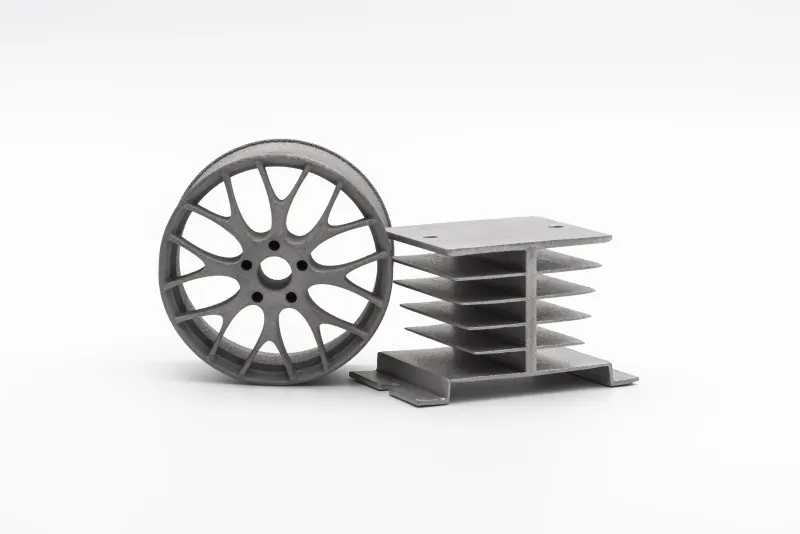
Conductive, wear-resistant and structural alloys for fittings, contacts, tooling and mechanical parts.
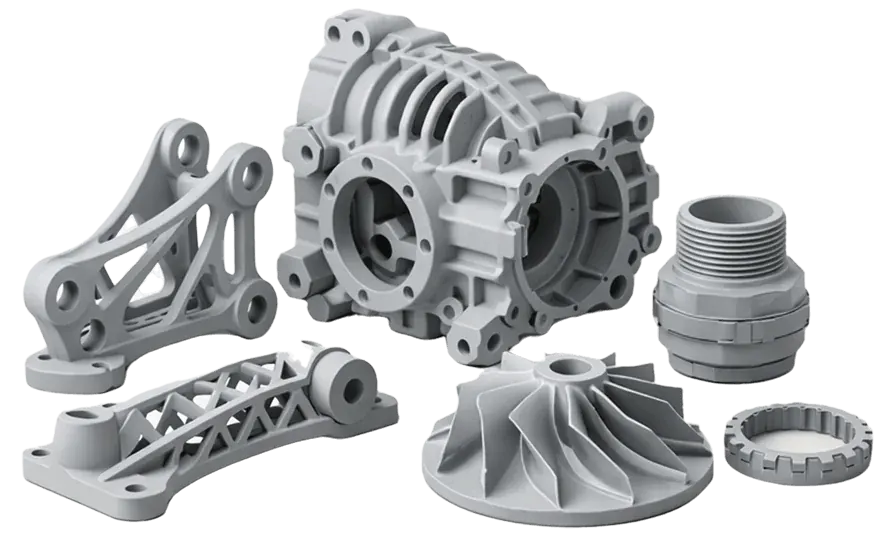
CNC plastics are useful when you need the final material behavior before mold tooling, or when the quantity is too low for injection molding.
| ABS | Low-cost engineering plastic for housings, prototypes and painted cosmetic parts. |
| Acetal / POM / Delrin | Low-friction, dimensionally stable material for gears, bushings, bearings and precision mechanisms. |
| Nylon | Durable, wear-resistant plastic for rollers, pulleys, gears and mechanical parts. |
| PEEK / PEI | High-performance plastics for heat, chemical, electrical and demanding engineering applications. |
| PMMA / Polycarbonate | Clear or translucent plastics for lenses, covers, light pipes and display parts. |
| PTFE / PP / HDPE / PVC | Chemical-resistant plastics for seals, liners, fluid handling and industrial components. |
Standard machining tolerances are enough for many parts. Add a technical drawing when the part has critical holes, fits, threads, sealing faces or inspection requirements.
| Requirement | How to specify it | Why it matters |
|---|---|---|
| General dimensions | Use standard tolerances unless a feature is function-critical. | Over-tolerancing increases setup time, inspection effort and cost. |
| Holes and bores | Call out diameter, depth, fit class and positional requirement on the drawing. | These features often control assembly, bearings, pins and seals. |
| Threads | Specify UNC, UNF, metric or insert requirement with depth and access direction. | Threading route changes tool access, cycle time and inspection. |
| Cosmetic surfaces | Mark visible faces and required finish before quote. | Tool paths, setup orientation and finishing depend on cosmetic priority. |
| Inspection | Send drawing notes for measurement report, material certificate or FAI needs. | Quality documentation should be planned before production starts. |
CNC parts can ship as-machined for speed, or receive finishing for corrosion resistance, wear resistance, insulation, color or cosmetic presentation.
Visible tool marks with deburred or broken edges. Fastest route for functional prototypes and fixtures.
Creates a more uniform matte surface and reduces the visual contrast of tool paths.
Improve corrosion resistance, color, wear behavior or appearance for aluminum and selected metals.
Nickel, zinc, chromate, brushing and polishing can support conductivity, protection or presentation needs.
CNC is precise, but every cut needs tool access. Simpler setups, realistic internal radii and clear drawings usually reduce lead time and cost.
| Design area | Guidance |
|---|---|
| Inside corners | Sharp internal corners are naturally radiused by cutting tools. Add realistic radii instead of specifying square pockets. |
| Deep pockets | Deep cavities require longer tools, slower cutting and more risk. Reduce depth or increase corner radius where possible. |
| Thin walls | Thin walls can chatter, bend or distort during machining. Increase thickness for metals and especially for plastics. |
| Threads | Specify thread type, depth and access. UNC, UNF and metric threads are common; inserts can be reviewed if needed. |
| Tolerances | Use standard tolerances by default and call out only critical dimensions on a drawing to control cost. |
| Surface finish | Identify cosmetic faces, sealing faces, bead blast, anodizing, polishing or coating needs before quote. |
| Part size | Maximum size depends on material, geometry and machine route. Large parts should be reviewed from CAD and drawing. |
Use these answers to prepare CAD, drawings, materials and finish notes for quoting.
Choose CNC machining when you need production-grade metal or plastic, tighter tolerances, better surface finish, threaded features, flat sealing faces or material properties that printed parts cannot match.
Send STEP or STP files for geometry. Add a PDF drawing when you have critical tolerances, threads, surface finish, material notes, inspection requirements or cosmetic face callouts.
Yes. CNC is suitable for aluminum, stainless steel, titanium, copper, brass, steel and many engineering plastics including ABS, POM, nylon, PEEK, PEI, PMMA, PC, PTFE and PP.
Standard CNC tolerances depend on material, geometry and drawing requirements. Tight hole, bore and mating features can be reviewed when marked clearly on a technical drawing.
Options can include as-machined, deburred, bead blasted, brushed, polished, anodized, chromate conversion, powder coating, zinc coating, nickel plating and black oxide depending on material.
Avoid unnecessary tight tolerances, deep pockets, thin walls, tiny tools, complex setups and hard-to-machine materials. Use standard stock sizes and call out only the features that truly matter.
Send CAD, drawing, material, quantity and finish requirements. We will review the most practical CNC route and quote the part.